
Introducing the Heart in Hand Charm
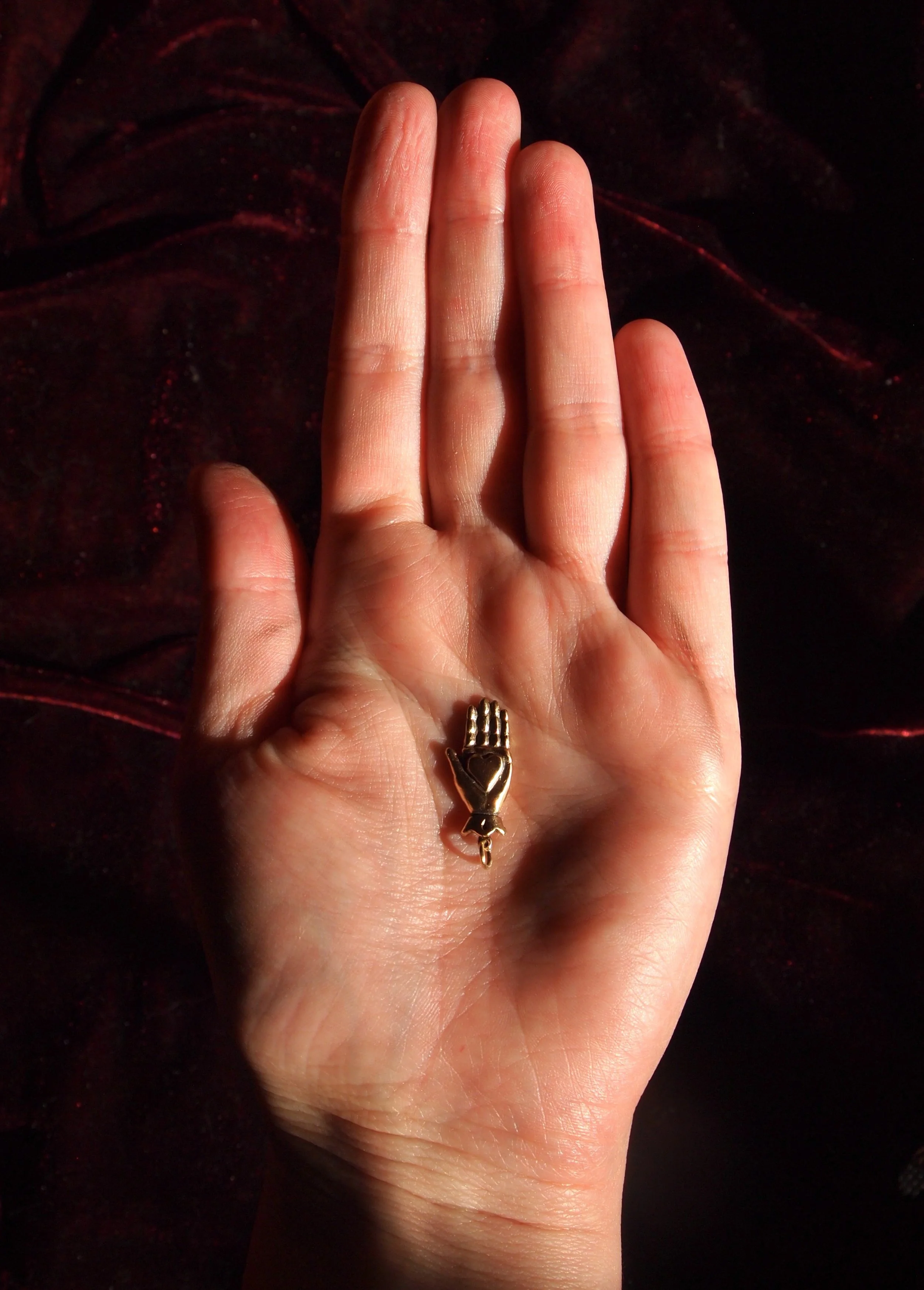
Heart in hand charm in ancient bronze
The heart in hand is a symbol for charity, kindness, friendship, and devotion. Meant as a hand extended in loving welcome.
Coming to you the day before valentines day, where we celebrate all the loves of our lives in the many forms they take.
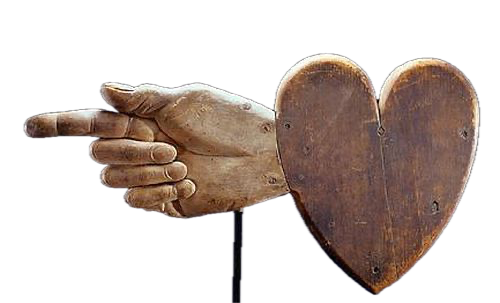
Heart-and-Hand weathervane, Chelsea, Massachusetts, 1830. American Museum of Folk Art.
A hand and a heart are universal symbols. Widely used, widely beloved, timeless and captivating. The symbol of a heart in hand has long symbolized devotion, appearing in religious medieval art as the fiery sacred heart, and later in the nineteenth century as a token of love or mourning. “Hand and heart shall never part.”
The image of a heart in an outstretched palm is associated largely with the shaker tradition of the northeastern United States, used to symbolize hard work and charity given from the heart. Of early Christian sects in the United States, the shakers stand out for their ideals. They practiced egalitarianism, pacifism, and prioritized simple living and slow, skillful craftsmanship. Examples of Shaker folk art are stunning and plentiful. Folk art reflects and shapes culture, and once traditions shift forms or cease to exist, their influence is often still felt through their craft. Images are woven into the fabric of a place. As of 2025, there were three practicing shakers.
The image has also been linked to the organization known as the odd fellows, appearing above three interlinked chains symbolizing friendship, love, and truth.
Without organizational connotation, the symbol of the heart in the palm of the hand continues to appear widely today.
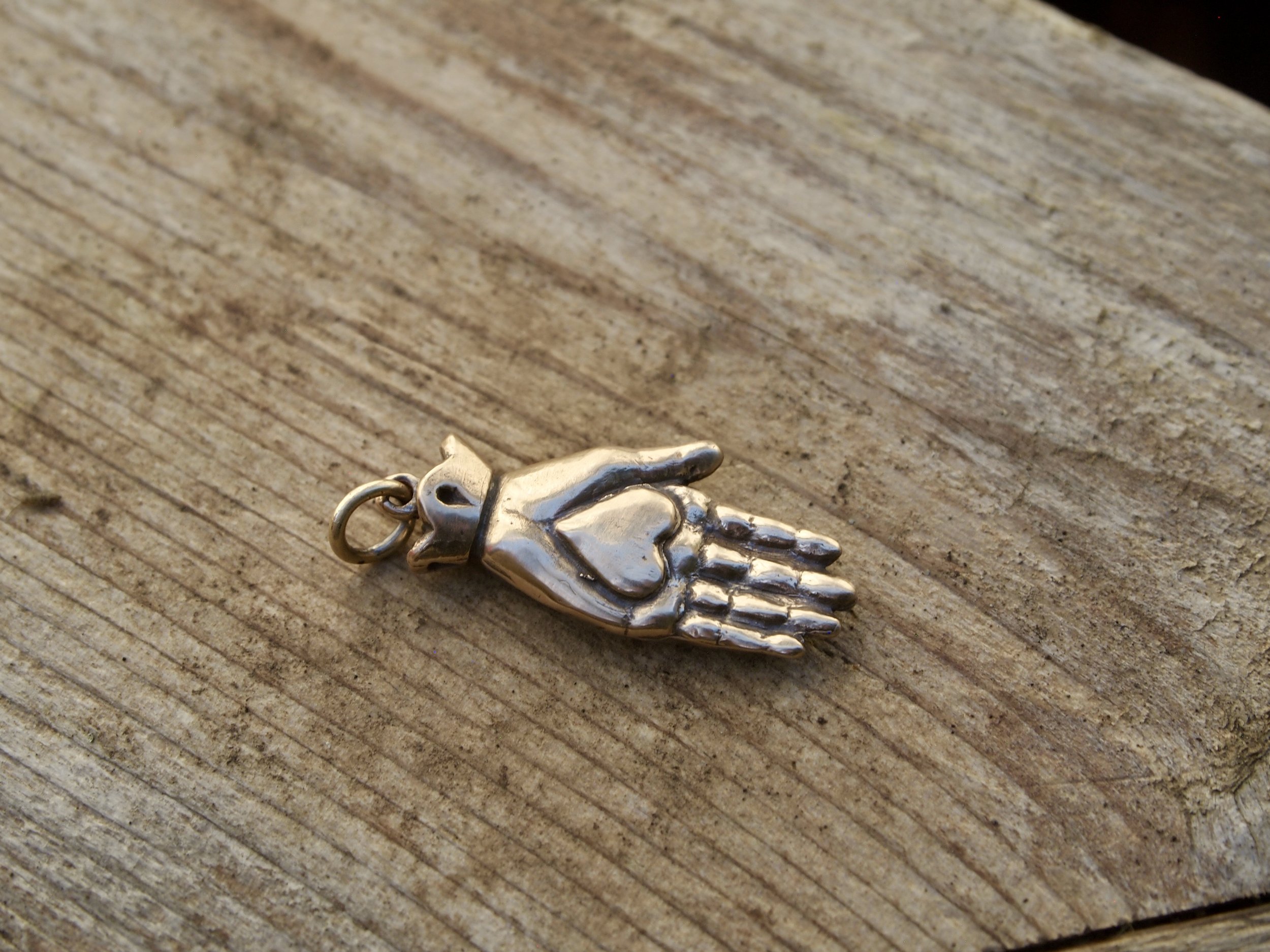
Process
I have been gravitating more this year to creating sculptural and illustrative work, shifting processes and following inspiration. I like to employ a lot of different methods in my studio at once, and when I feel uninspired in one area I can shift to another.
The pieces I create are made by hand fabrication or some form of casting. Hand fabrication refers to when a piece is made “from scratch,” milling bullion into sheet and wire, or purchasing it in that form, then forming and soldering each component. The one of a kind silver salix ring is an example of a piece made using hand fabrication.
If you are following along with me on social media, you may have seen me use a process called sand casting, a method I adore in its immediacy and ancient rudimentary feel. The Melusae shell charm is made this way. To make the heart in hand charm, I’m using a more complex casting process called lost wax casting.
Like sand casting, lost wax casting has been around for thousands of years. In this process, a wax model is carved, then molded in plaster. The plaster is fired in a kiln and the wax is burned out, leaving a perfect (hopefully) impression of the original wax model. Molten metal is then poured into the impression, and forced into every corner using gravity or velocity. The plaster is then removed, leaving a metal cast of the original wax model.
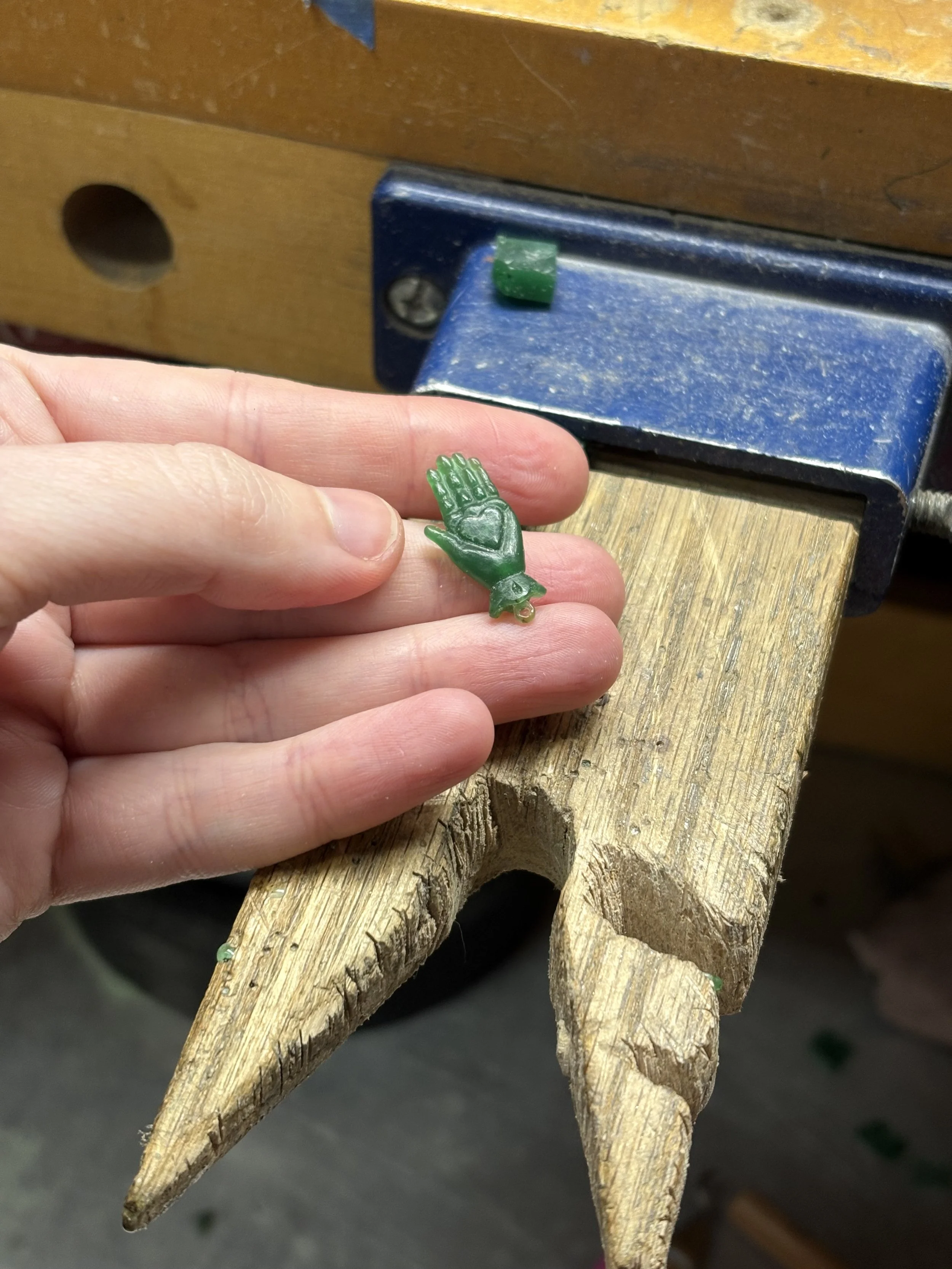
While the ancients used beeswax, here I’m using a hard microcrystalline jewelers wax. You can see the original carved model of the heart in hand charm below:
Wishing you love and wonder, given from the heart.